
What Are the Best Native Drought Tolerant Plants and Flowers for Bay Area Landscapes?
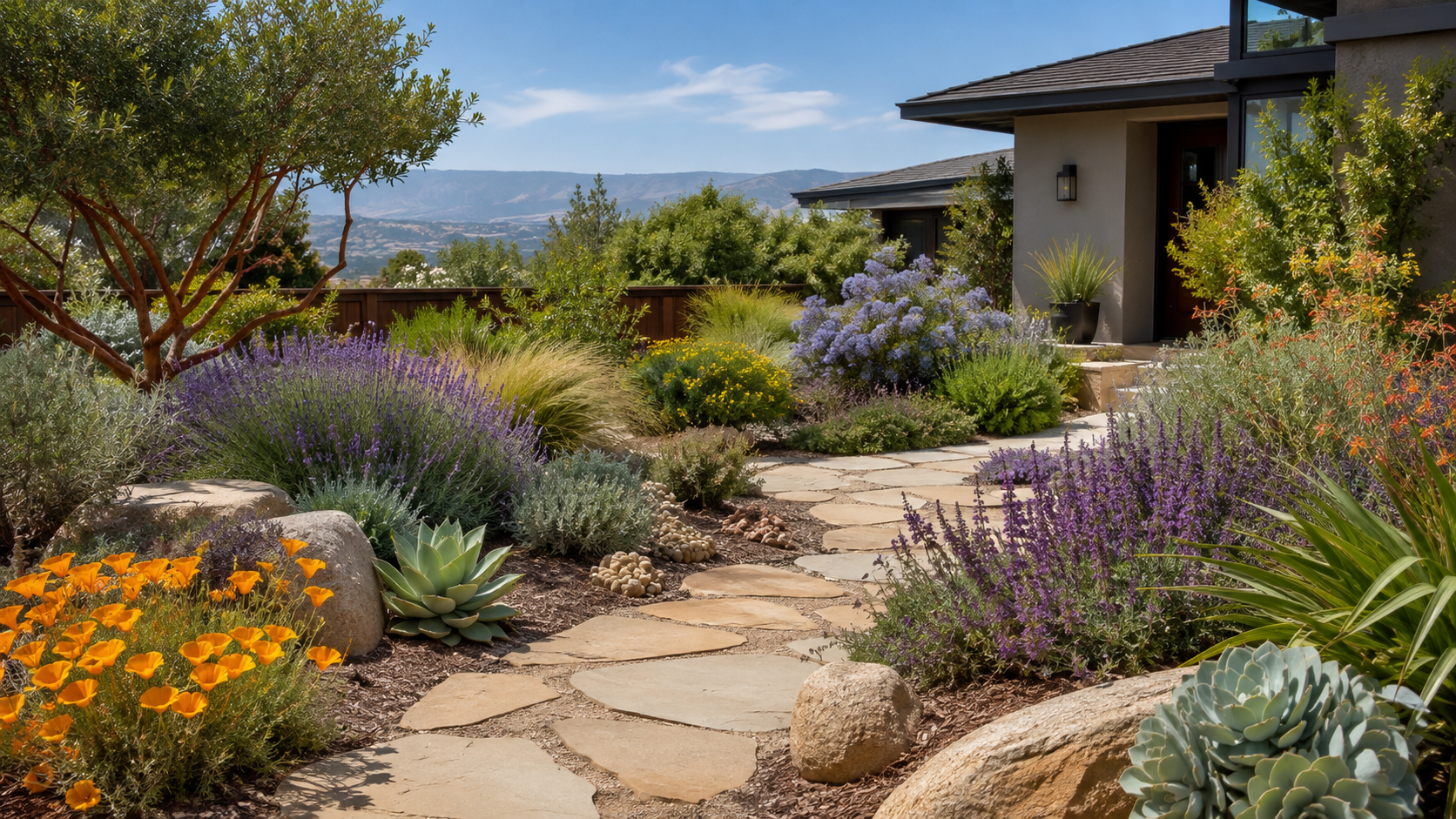
Creating a beautiful Bay Area landscape does not have to mean choosing between lush plantings and responsible water use. With the right native drought tolerant plants, homeowners can create colorful, textured, inviting outdoor spaces that complement California’s natural environment while requiring less supplemental irrigation once established.
The Bay Area’s generally Mediterranean climate—with wetter winters and long, dry summers—makes many California native species particularly well suited for residential landscapes. Local conditions vary considerably between coastal neighborhoods, inland valleys, hillsides, and shaded properties, so successful landscape design begins with matching plants to a site’s sun exposure, soil, drainage, available space, and microclimate. California native plants are often, but not universally, drought tolerant, making careful plant selection important.
From sculptural evergreen shrubs and flowering groundcovers to vibrant perennials that attract pollinators, there are plenty of drought tolerant plants and flowers that can make a Bay Area property feel distinctive, refined, and full of life.
Why Choose Native Drought Tolerant Plants for a Bay Area Landscape?
California native plants evolved in the region’s diverse climates and ecosystems, giving many species natural adaptations that help them perform well through prolonged dry periods. Once properly established, many can thrive with considerably less supplemental irrigation than conventional high-water landscape plants.
Native landscaping can provide several benefits:
- Lower long-term water requirements: Many established natives are adapted to California's dry summers.
- Seasonal color and texture: Native gardens can combine flowers, evergreen foliage, silver leaves, ornamental grasses, berries, and interesting branching forms.
- Wildlife habitat: Native plants can provide food and habitat for local birds, butterflies, bees, and other beneficial insects.
- A natural sense of place: Native species can make a landscape feel connected to the surrounding California environment.
- Excellent lawn alternatives: Groundcovers, flowering perennials, shrubs, mulch, hardscape, and other design elements can replace sections of thirsty turf.
- Compatibility with water-wise landscape design: Native plants work beautifully alongside permeable hardscapes, swales, drip irrigation, and rainwater-conscious landscape features.
That does not mean every California native should be planted everywhere. Successful drought-tolerant landscaping still depends on placing the right plant in the right location. Soil conditions, drainage, sunlight, mature plant size, irrigation, coastal exposure, and the property's specific microclimate should all influence plant selection.
Best Native Drought Tolerant Plants for Bay Area Landscapes
The Bay Area offers an exceptionally broad plant palette. The following drought tolerant landscape plants can serve as excellent starting points for homeowners interested in a California-inspired garden.
1. California Lilac
Ceanothus species and cultivars
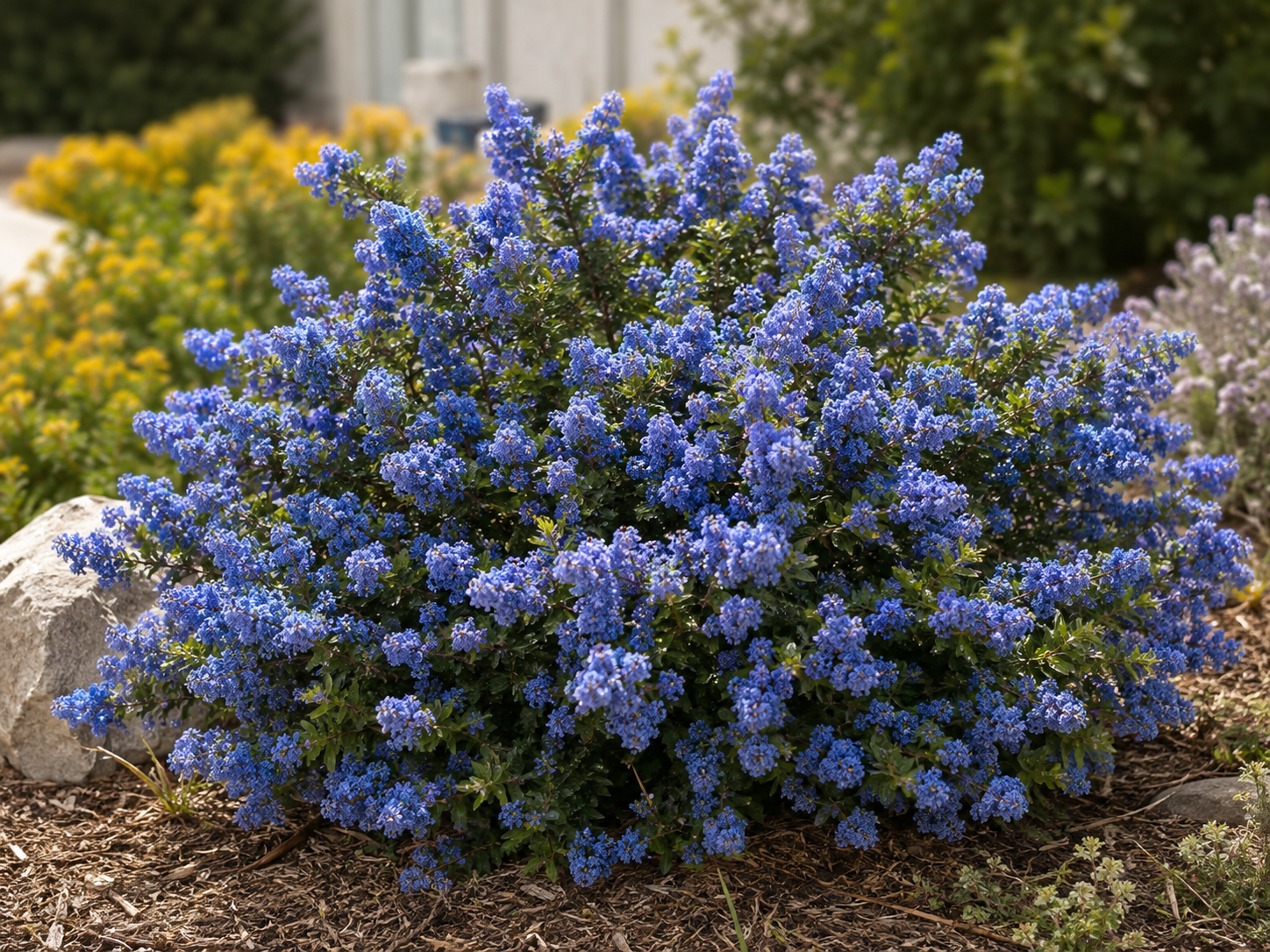
California lilac is one of the signature plants of a California native landscape. Depending on the variety, Ceanothus can form a compact groundcover, medium-sized shrub, or substantial landscape specimen.
Its masses of blue to blue-purple flowers can create a dramatic seasonal display, while evergreen foliage gives the landscape structure for much of the year. Different Ceanothus selections tolerate different conditions, so choosing a variety appropriate for the property's soil, exposure, and available space is important.
Landscape uses: Foundation plantings, slopes, screens, specimen shrubs, habitat gardens, and flowering focal points.
2. Manzanita
Arctostaphylos species and cultivars
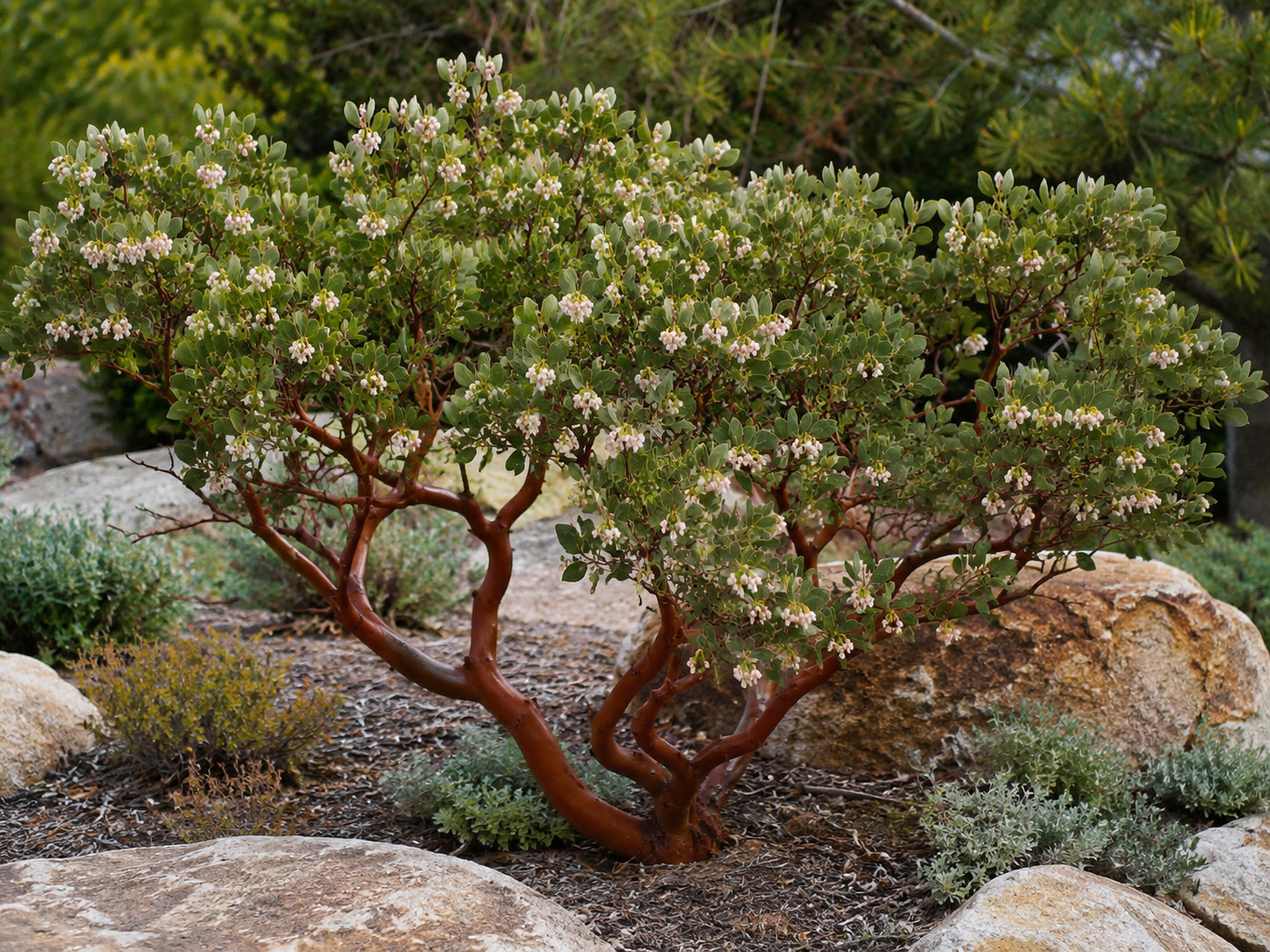
For year-round character, few native drought tolerant plants are as distinctive as manzanita. These evergreen shrubs are known for smooth, often reddish or mahogany-colored bark, sculptural branching, small leaves, and clusters of delicate urn-shaped flowers.
Manzanitas range from low-growing groundcovers to large shrubs, allowing them to fill several roles in a landscape. Their architectural form works particularly well in contemporary, California modern, rustic, and naturalistic garden designs.
Landscape uses: Specimen plantings, slopes, front yards, foundation beds, groundcovers, and architectural accent plants.
3. California Fuchsia
Epilobium canum
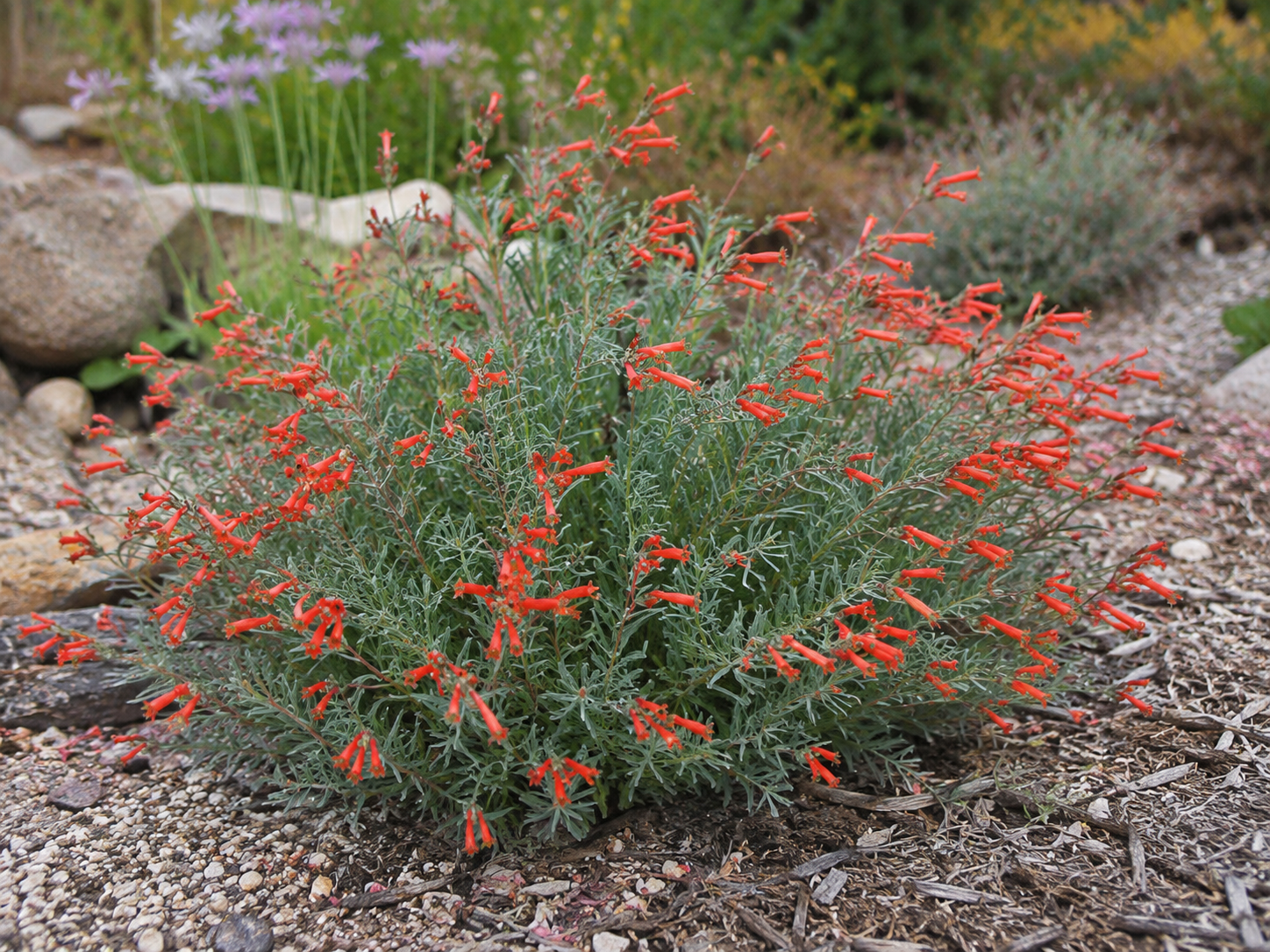
Homeowners looking for vivid color should consider California fuchsia. Its bright tubular flowers provide a striking display, especially when other plants are beginning to move past their spring flowering season.
California fuchsia works especially well when planted in masses or repeated through a dry garden, where its intense color can contrast beautifully against gray-green foliage, stone, gravel, and natural mulch.
Landscape uses: Borders, pollinator gardens, slopes, rock gardens, and colorful mass plantings.
4. California Buckwheat
Eriogonum species
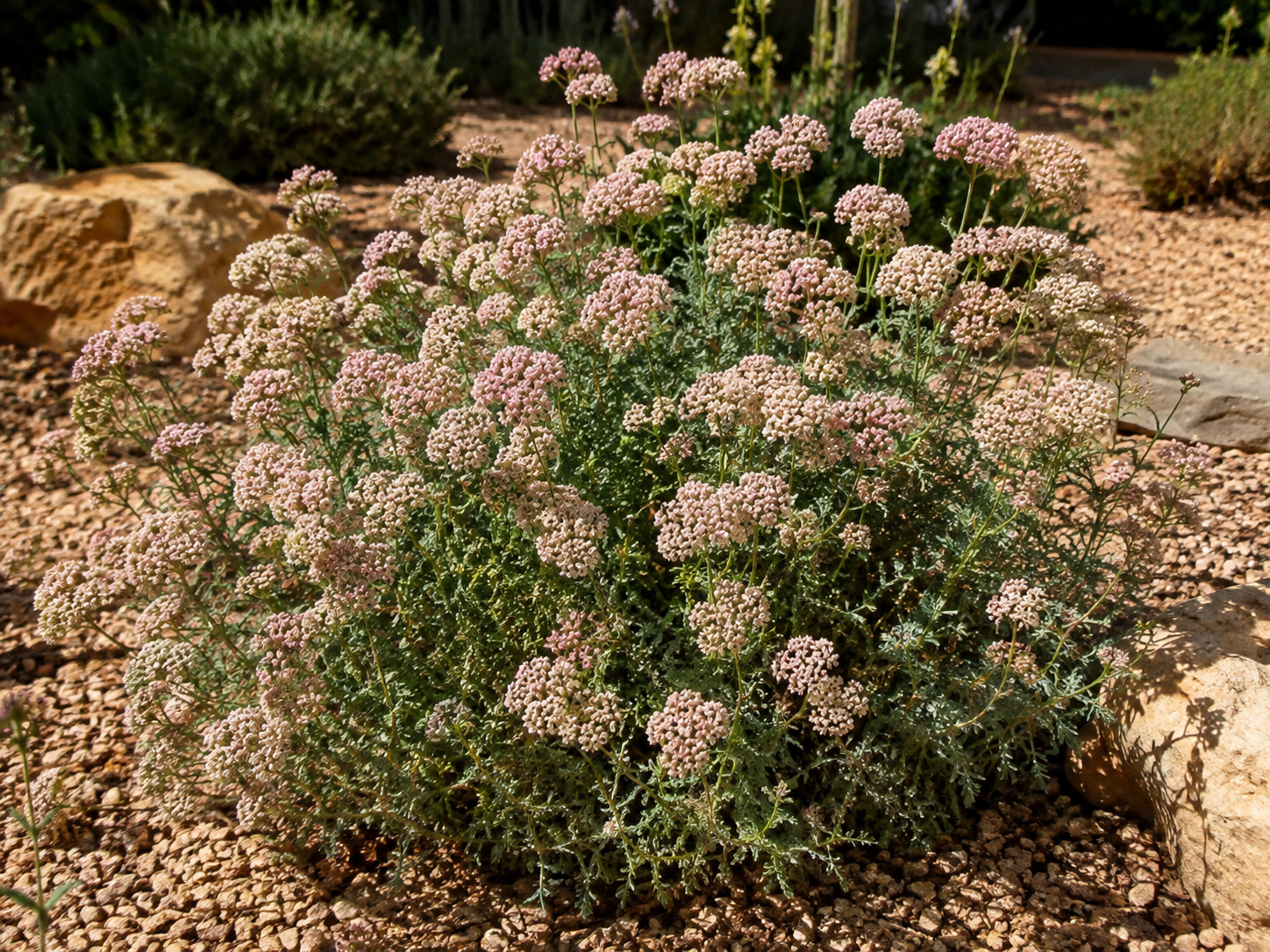
California buckwheats offer a combination of drought tolerance, long-lasting visual interest, and habitat value. Different species produce clusters of white, cream, pink, or rosy flowers that often develop attractive rust or brown tones as they age.
Their fine texture makes them useful for softening retaining walls, pathways, boulders, and larger structural plants.
Landscape uses: Dry borders, habitat gardens, slopes, naturalistic gardens, and mass plantings.
5. Toyon
Heteromeles arbutifolia
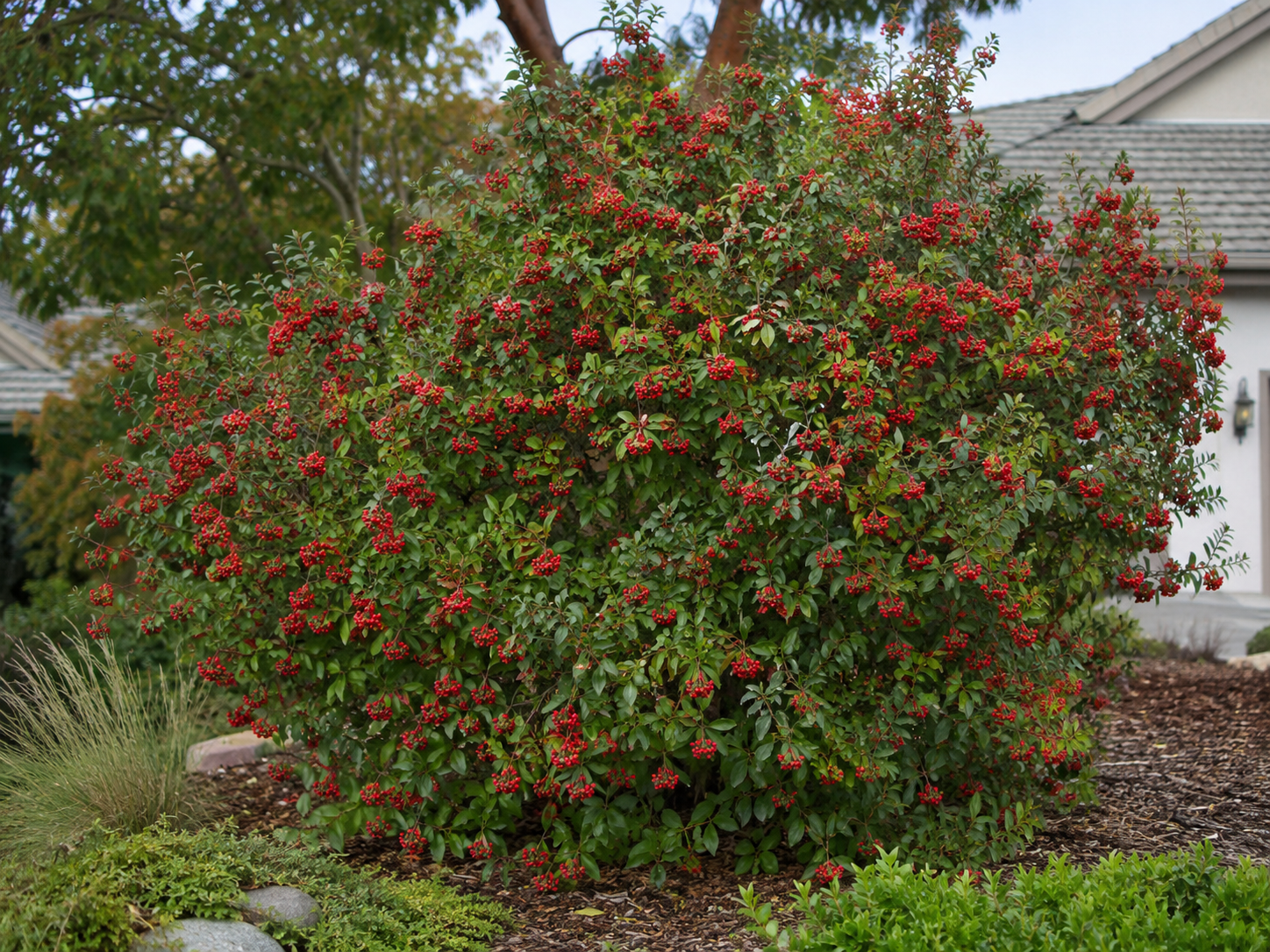
Toyon is an evergreen California native shrub that can become a substantial landscape feature. Its dark green foliage, clusters of white flowers, and red berries provide interest across multiple seasons.
Because it can grow into a large shrub or small tree, toyon is useful when a landscape needs height or screening without relying entirely on conventional hedge plants.
Landscape uses: Privacy screening, large borders, wildlife gardens, background planting, and informal hedges.
6. Coffeeberry
Frangula californica
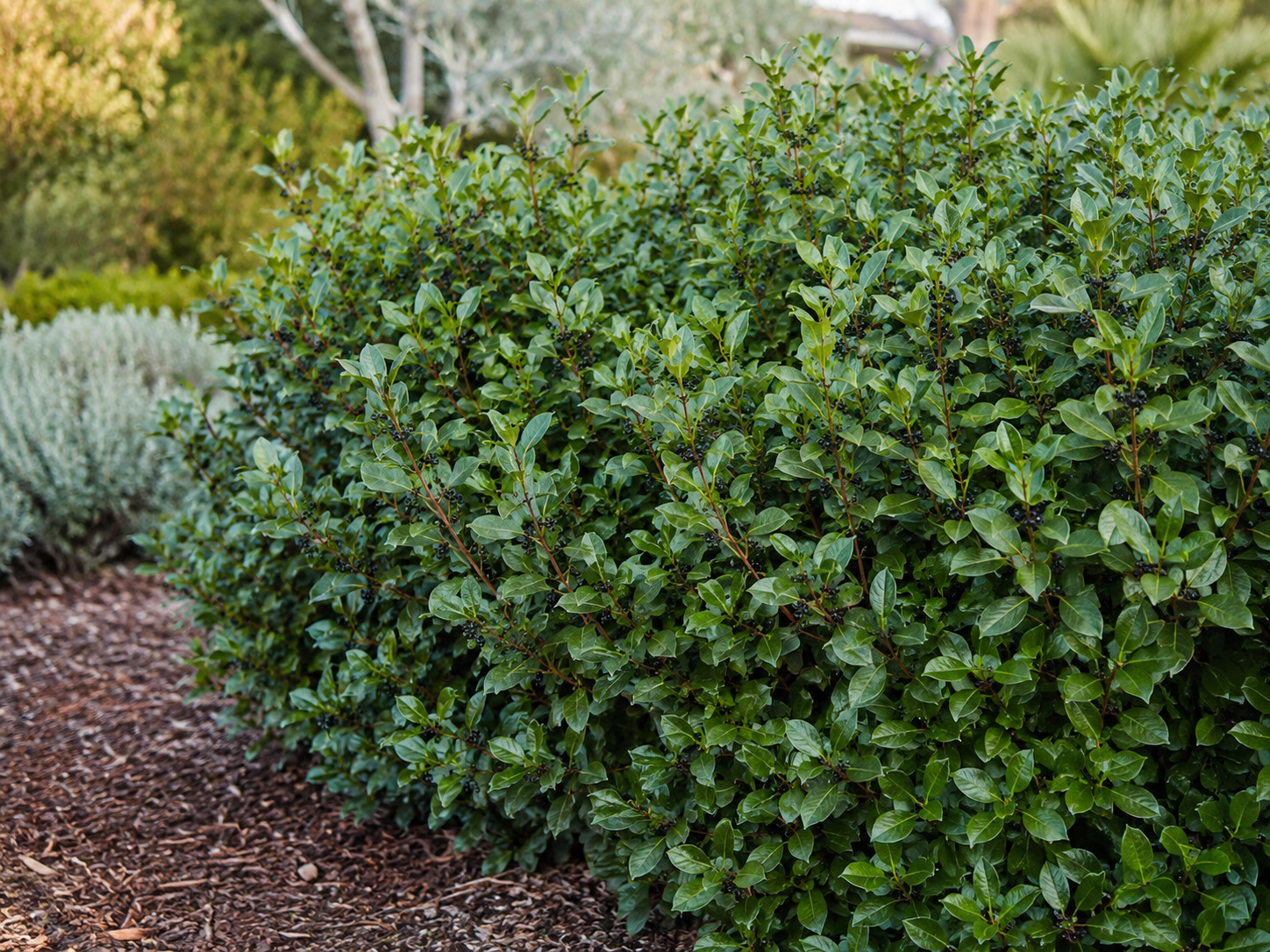
California coffeeberry is another versatile evergreen native that fits comfortably into designed residential landscapes. Its foliage creates a strong green backdrop, while berries provide additional seasonal interest.
Coffeeberry can work particularly well where homeowners want the practical function of a hedge or screening shrub while maintaining a more natural California planting palette.
Landscape uses: Screens, mixed borders, foundation plantings, habitat gardens, and informal hedging.
7. Sticky Monkeyflower
Diplacus aurantiacus
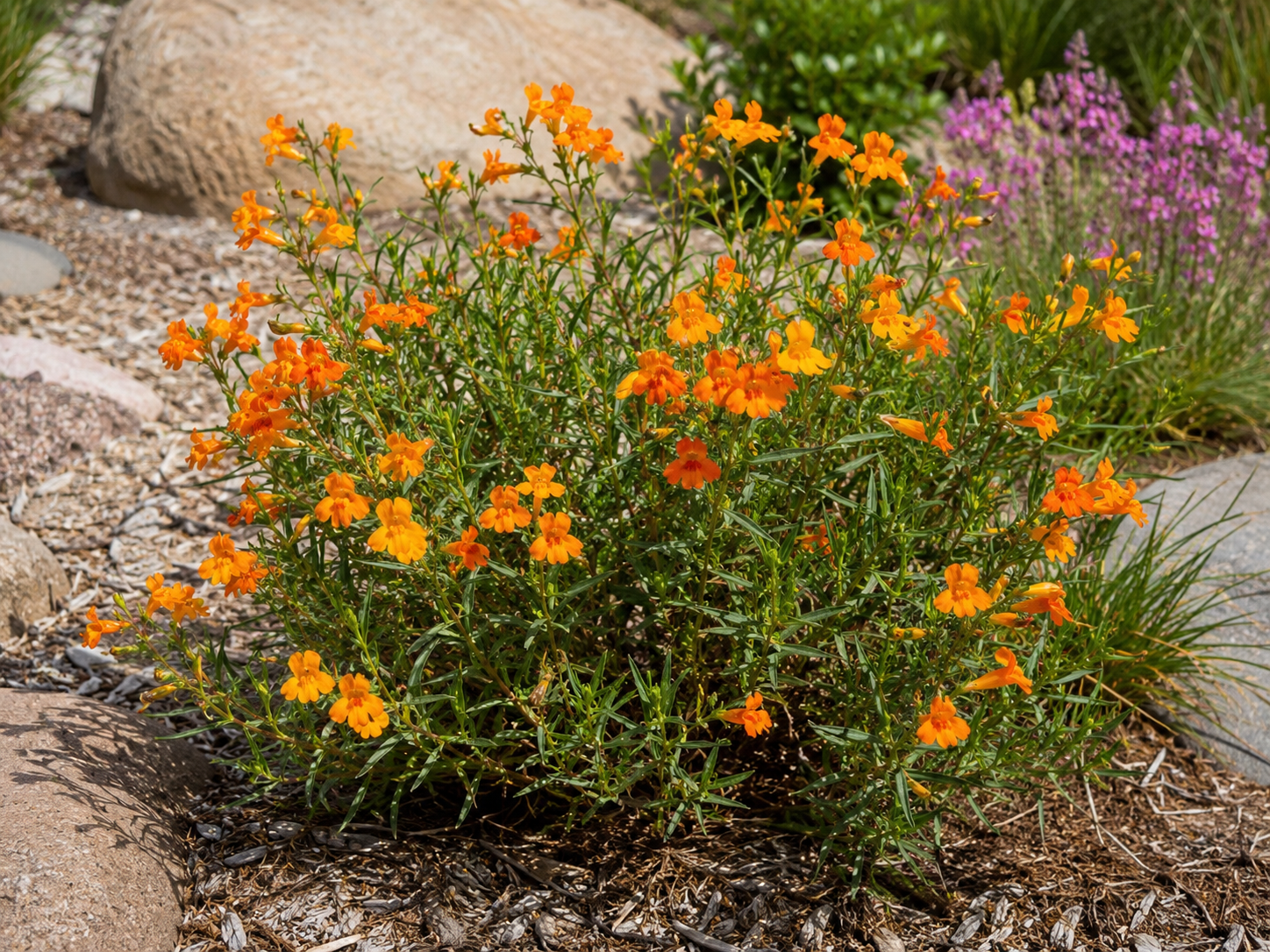
Sticky monkeyflower brings cheerful color to dry California gardens. Its tubular blooms occur in shades that can range from yellow and orange to deeper warm tones depending on the selection.
The plant pairs beautifully with manzanita, buckwheat, sages, ornamental grasses, rocks, and other drought tolerant landscape plants, helping create a layered landscape that feels vibrant without appearing overly formal.
Landscape uses: Slopes, borders, rock gardens, pollinator plantings, and colorful accents.
8. Common Yarrow
Achillea millefolium
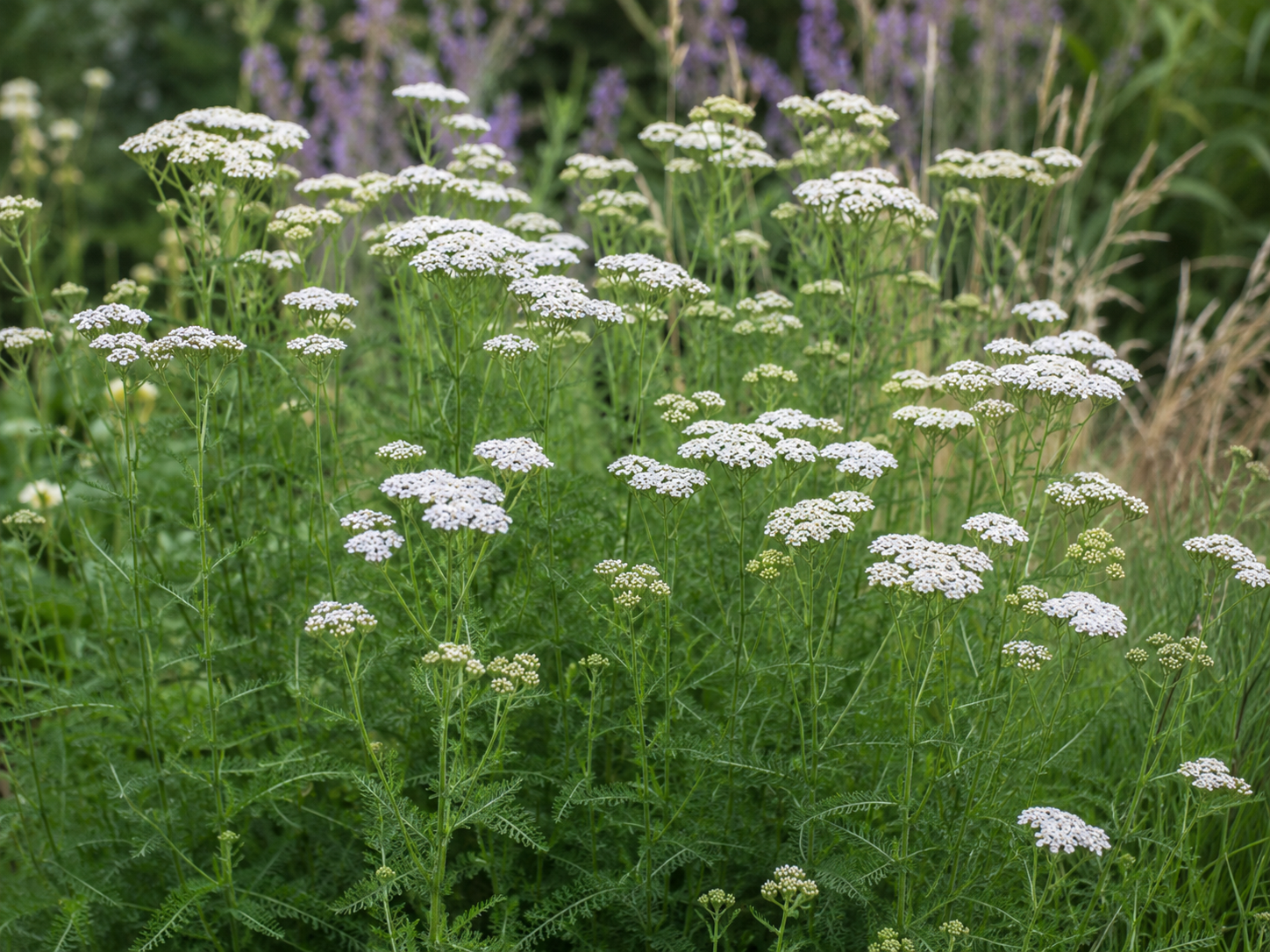
Yarrow is a useful flowering perennial for water-conscious landscapes, particularly where a softer, meadow-inspired appearance is desired. Its fern-like foliage and broad flower clusters create a fine-textured contrast with shrubs and architectural hardscaping.
Yarrow can also be considered in alternatives to conventional turf in appropriate situations.
Landscape uses: Meadow gardens, borders, lawn alternatives, pollinator gardens, and informal pathways.
9. Hummingbird Sage
Salvia spathacea
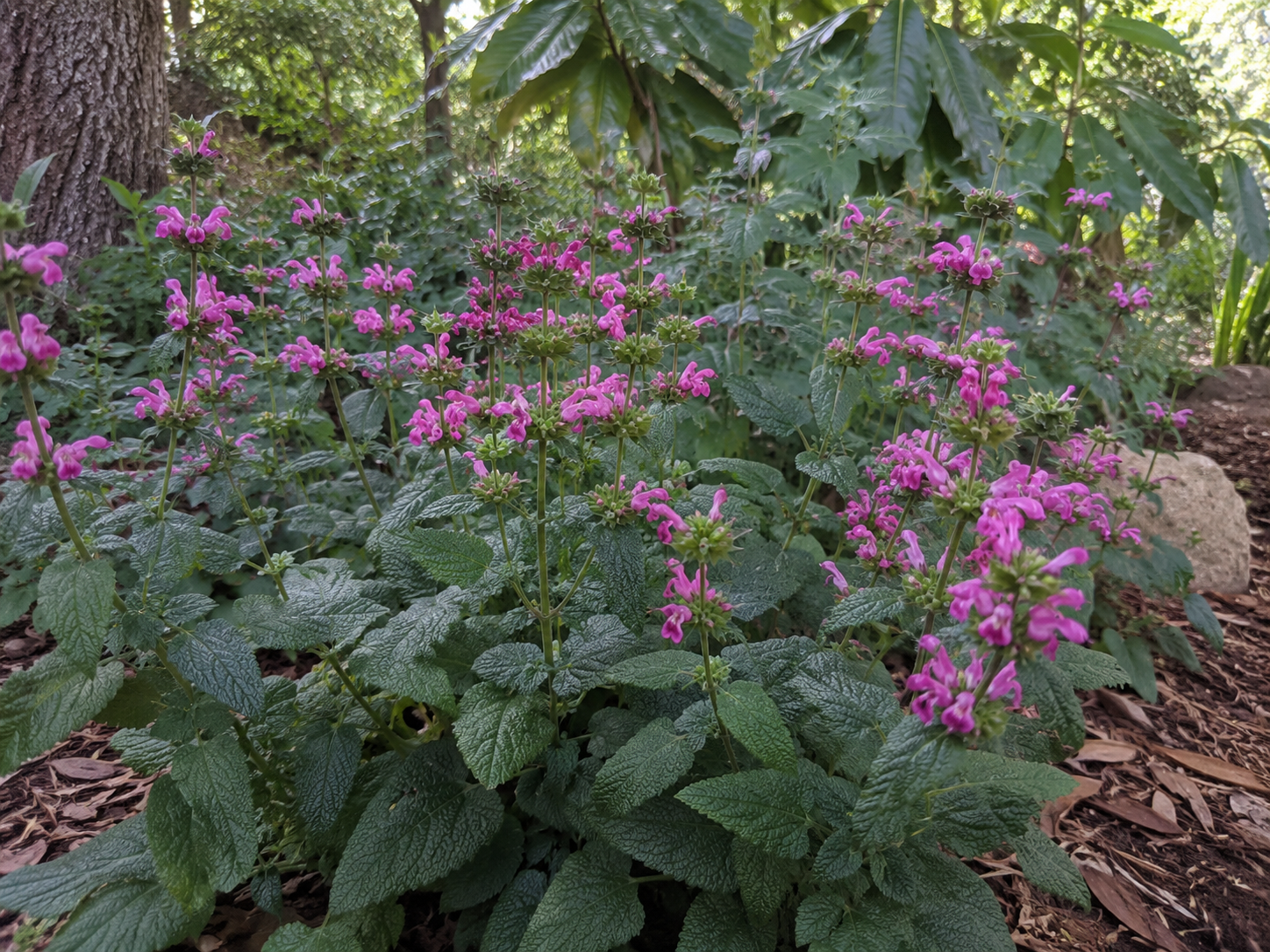
Not every drought-tolerant planting area is in full sun. Hummingbird sage is particularly valuable for partially shaded parts of California gardens.
Its aromatic foliage and bright flowers can add richness beneath taller plants or in protected locations, making it useful for creating transitions between sunnier garden areas and shaded spaces.
Landscape uses: Part-shade gardens, beneath trees, woodland-inspired plantings, borders, and pollinator gardens.
10. Yerba Buena
Clinopodium douglasii
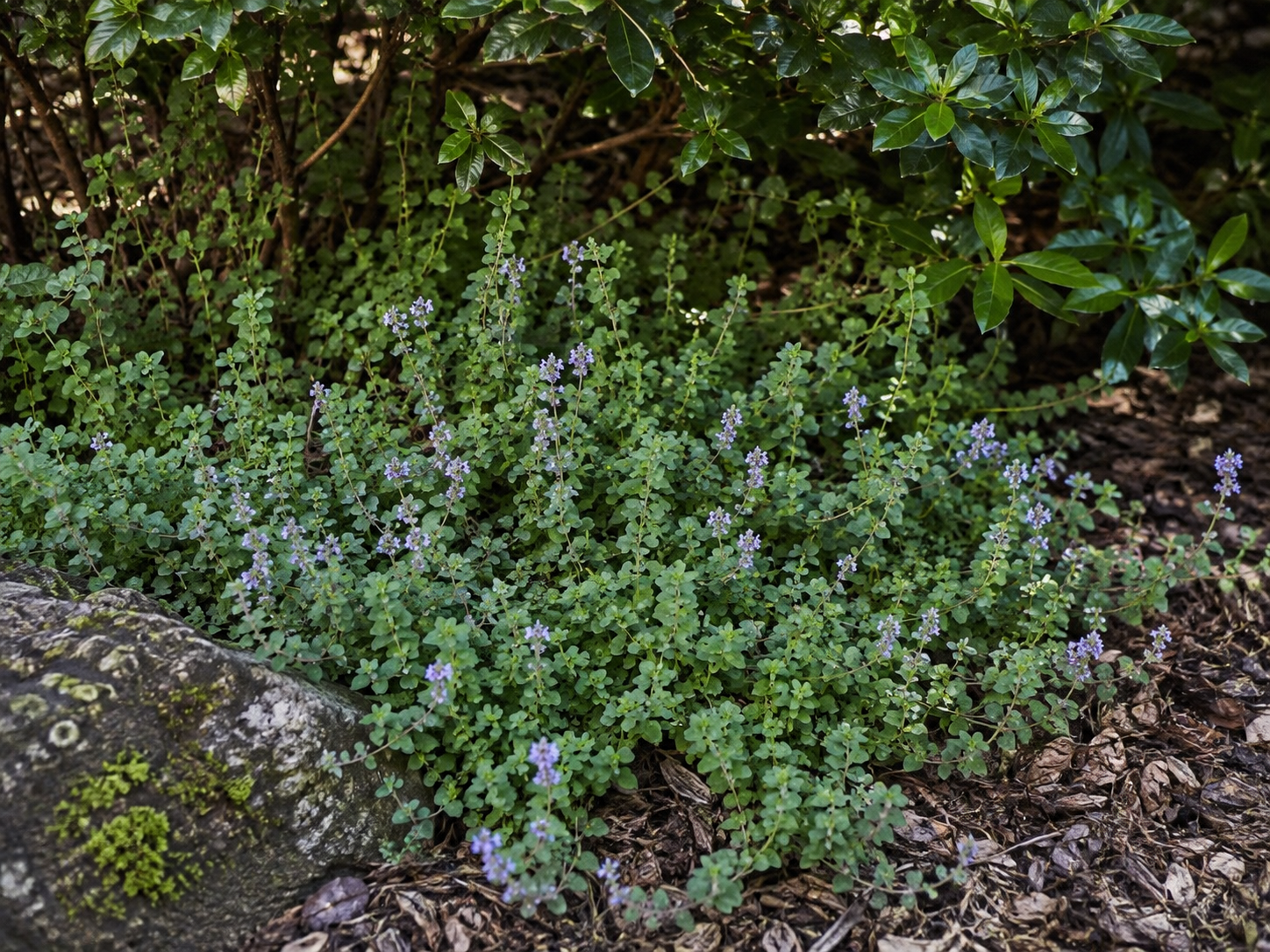
For smaller-scale groundcover applications, yerba buena can provide a soft native alternative beneath and between larger plantings. California native gardening resources identify it as a useful small-scale groundcover, especially in appropriate shaded or partly shaded settings.
Landscape uses: Groundcover, shaded beds, woodland gardens, and spaces beneath larger shrubs.
Native Drought Tolerant Flowers for Seasonal Color
A drought-conscious garden does not need to look sparse or colorless. In fact, one of the strengths of California landscaping is the enormous selection of drought tolerant plants and flowers available for creating changing displays throughout the year.
Along with California fuchsia, monkeyflower, buckwheat, yarrow, and flowering sages, homeowners may consider incorporating native annual wildflowers in appropriate areas.
The California poppy is an obvious favorite. Other native wildflowers and flowering plants can be mixed into informal gardens to create seasonal bursts of color and help a landscape feel more dynamic.
The key is not simply planting as many flowering species as possible. A more cohesive design typically uses repetition. Selecting a limited palette of compatible plants and repeating them throughout the landscape can create stronger visual rhythm and a more intentional appearance.
How to Design With Drought Tolerant Landscape Plants
Choosing individual plants is only part of creating an attractive water-wise landscape. The arrangement of those plants determines whether the finished garden looks polished and intentional.
Consider several basic design strategies.
Create Layers of Height
A well-designed planting bed can combine:
- Low groundcovers along walkways and edges
- Flowering perennials in the foreground
- Medium shrubs through the center of planting areas
- Larger shrubs or small trees for height and screening
Layering creates depth while allowing plants to complement rather than compete with one another.
Combine Different Foliage Textures
Flowers provide seasonal excitement, but foliage carries a landscape throughout the rest of the year. Mix fine grasses and small-leaved shrubs with broader foliage, silver-gray plants, deep greens, and sculptural branching.
Native landscape design can draw visual interest from leaf and bark color as well as flowers.
Repeat Plants for a More Sophisticated Look
Rather than installing one of everything, consider repeating the same plant in groups throughout the property.
Three clusters of California fuchsia, for example, can create greater visual impact than three unrelated flowering plants scattered throughout the yard.
Blend Softscape and Hardscape
Native drought tolerant plants can look especially striking next to thoughtfully designed hardscape.
Paver walkways can weave between flowering planting beds. Architectural manzanitas can frame a patio. Low-growing natives can soften the perimeter of a driveway, fire pit area, pool deck, or retaining wall.
The contrast between structured hardscape and natural planting can create the upscale yet relaxed aesthetic that works so well in Bay Area outdoor living spaces.
Remember: Drought Tolerant Does Not Mean No Water
Even plants known for excellent drought tolerance need appropriate irrigation while their root systems are becoming established. Native and drought-tolerant plants should not simply be installed and left without water.
Once established, irrigation requirements vary by species, soil, location, exposure, and local climate. Plants with similar water requirements should generally be grouped into compatible irrigation zones.
Fall and winter can also be particularly advantageous planting periods for many California natives because cooler conditions and seasonal rainfall can support establishment before the dry summer period.
A thoughtfully designed irrigation strategy helps plants develop healthy root systems without giving drought-adapted species more summer water than they need.
Choosing Native Plants for Your Specific Bay Area Property
There is no single planting palette that is ideal for every Bay Area home.
A windy coastal property near San Francisco may require a different selection from a hot, sunny backyard in an inland valley. Hillsides present different challenges from flat lots, while clay soil, fast-draining soil, mature trees, afternoon shade, reflected heat, and existing irrigation can all influence which plants will thrive.
This is why the best drought tolerant landscape plants should be selected as part of a complete landscape plan rather than treated as a generic shopping list.
Before finalizing a design, consider:
- Sun and shade throughout the day
- Soil type and drainage
- Mature width and height of each plant
- Coastal versus inland exposure
- Existing trees and structures
- Irrigation requirements
- Desired privacy and screening
- Seasonal flower and foliage color
- Relationship to patios, pathways, driveways, and entertainment areas
- Desired level of landscape maintenance
Locally native species are particularly valuable because they are adapted to specific regional climate conditions, but even these plants need to be matched carefully with the conditions of an individual property.
Create a Drought-Tolerant Bay Area Landscape With Opulands Landscape & Design
At Opulands Landscape & Design, we are a Bay Area family-owned outdoor remodeling company specializing in luxury residential landscaping and hardscaping design and installation. We create complete front yard and backyard transformations designed around the architecture of the home, the needs of the homeowner, and the possibilities of the property.
Our team designs and builds beautiful paver driveways, patios, walkways, and pool decks that can be complemented with premium outdoor features such as BBQ islands, pergolas, and fire pits. We can also install synthetic lawns and putting greens to help transform an ordinary yard into an opulent outdoor oasis.
Softscaping is an equally important part of a complete landscape transformation. Opulands can design and install thoughtfully planned drought-tolerant gardens and flower bulb gardens using carefully selected plants, complementary textures, and attractive planting arrangements. Whether you want to incorporate native drought tolerant plants, replace water-intensive landscaping, add more seasonal color, or create an entirely new planting scheme around a renovated outdoor living space, we can develop a design that brings the individual elements together.
Quality workmanship is a cornerstone of Opulands Landscape & Design, and our goal is to create an outdoor living space you will enjoy for years to come.
Build a Beautiful Bay Area Landscape That Uses Water More Wisely
The best drought-tolerant gardens prove that conserving water does not require sacrificing beauty. California lilac, manzanita, California fuchsia, buckwheat, toyon, coffeeberry, monkeyflower, yarrow, hummingbird sage, and other drought tolerant plants and flowers can contribute color, structure, habitat, texture, and year-round visual interest to Bay Area landscapes.
The ideal plant palette, however, depends on your property's unique conditions and the way you want to use your outdoor space. Pairing appropriate plants with carefully planned hardscape, irrigation, gathering areas, and landscape features can turn a conventional yard into a cohesive outdoor environment.
Ready to reimagine your front yard or backyard? Contact Opulands Landscape & Design today to schedule your free drought tolerant landscaping design consultation. Let our team help you create a beautiful, functional, and drought-conscious Bay Area outdoor living space designed for years of enjoyment.