
How to Design an Outdoor Living Space That Feels Like an Extension of Your Home: A Landscaping Design Guide

A well-designed outdoor living space should feel like more than a separate patio or backyard feature—it should function as a natural continuation of your home. By coordinating materials, architecture, furnishings, landscaping, and amenities, homeowners can create outdoor environments that feel just as comfortable and refined as their interior living spaces. Whether you are planning a complete backyard transformation or upgrading an existing patio, learning how to design outdoor living space layouts with intention can dramatically improve both the appearance and usability of your property.
For Bay Area homeowners, outdoor living also presents an opportunity to take advantage of the region's favorable climate while expanding the way a home can be enjoyed throughout the year. From elegant paver patios and covered entertaining areas to outdoor kitchens, fire features, and thoughtfully designed landscaping, a luxury outdoor living space can combine beauty, comfort, and functionality into one cohesive environment.
Start by Connecting the Outdoor Space to Your Home
One of the most important principles when designing an outdoor living space is creating a strong visual and functional connection between the interior and exterior of the home. Instead of treating the backyard as an entirely separate design project, consider how the outdoor environment can complement the home's architecture, interior finishes, and overall style.
Look at the areas where the home opens into the backyard. Sliding doors, French doors, folding glass walls, and large windows can all create natural transitions between indoor and outdoor spaces. The closer your outdoor patio or entertaining area is to frequently used interior spaces such as the kitchen, dining room, or family room, the easier the outdoor area will be to use.
Design continuity can also be created through:
- Complementary flooring and paving materials
- Similar color palettes indoors and outdoors
- Coordinated furniture styles
- Repeated architectural details
- Consistent lighting temperatures
- Landscaping that frames views from inside the home
When these elements work together, the transition from indoors to outdoors can feel intentional rather than abrupt.
Define How You Want to Use Your Outdoor Living Space
Before selecting materials or landscape features, determine how the space will actually be used. A beautiful backyard that does not accommodate your lifestyle can quickly become underutilized.
Start by identifying your priorities. Some homeowners primarily want a peaceful retreat, while others envision an elaborate entertainment space designed for hosting family and friends.
A luxury outdoor living space might include dedicated areas for:
- Outdoor dining
- Cooking and grilling
- Casual lounging
- Poolside relaxation
- Entertaining guests
- Watching television or sporting events
- Gathering around a fire
- Gardening
- Children's recreation
- Putting or other backyard activities
Understanding these priorities early allows the overall landscape design to support your lifestyle rather than forcing individual features into the yard later.
Create Distinct Outdoor Living Zones
One of the most effective ways to design outdoor living space layouts is to organize the property into functional zones. Similar to the rooms inside your home, each outdoor area can serve a specific purpose while still remaining visually connected to the larger landscape.
For example, a backyard may include a patio directly outside the home for dining, a nearby BBQ island for cooking, a pergola-covered lounge area for relaxation, and a firepit positioned farther into the yard as a secondary gathering destination.
Creating distinct zones helps large properties feel more organized while making smaller yards more functional.
Pathways, changes in paving materials, landscape borders, planters, lighting, and furniture arrangements can subtly define each area without creating unnecessary barriers.
Choose High-End Hardscaping Materials
Hardscaping forms the structural foundation of most outdoor living spaces. Patios, walkways, retaining walls, driveways, pool decks, and seating areas influence both the appearance and everyday functionality of the landscape.
When designing an outdoor living space with a luxury focus, material selection should complement the home's architecture while providing durability and long-term performance.
Popular options may include:
- Concrete pavers
- Porcelain pavers
- Natural stone
- Travertine
- Decorative concrete
- Stone veneer
- Architectural block
Pavers are particularly versatile because they are available in numerous sizes, textures, patterns, and colors. A professionally designed paver patio can become the visual anchor of an outdoor entertainment area while connecting seamlessly with walkways, pool decks, and surrounding landscape features.
Build a Luxury Outdoor Kitchen or BBQ Island
Outdoor cooking areas have become one of the defining features of modern luxury landscapes. Instead of repeatedly carrying food and supplies between the kitchen and backyard, a dedicated BBQ island or outdoor kitchen allows homeowners to prepare meals while remaining part of the gathering.
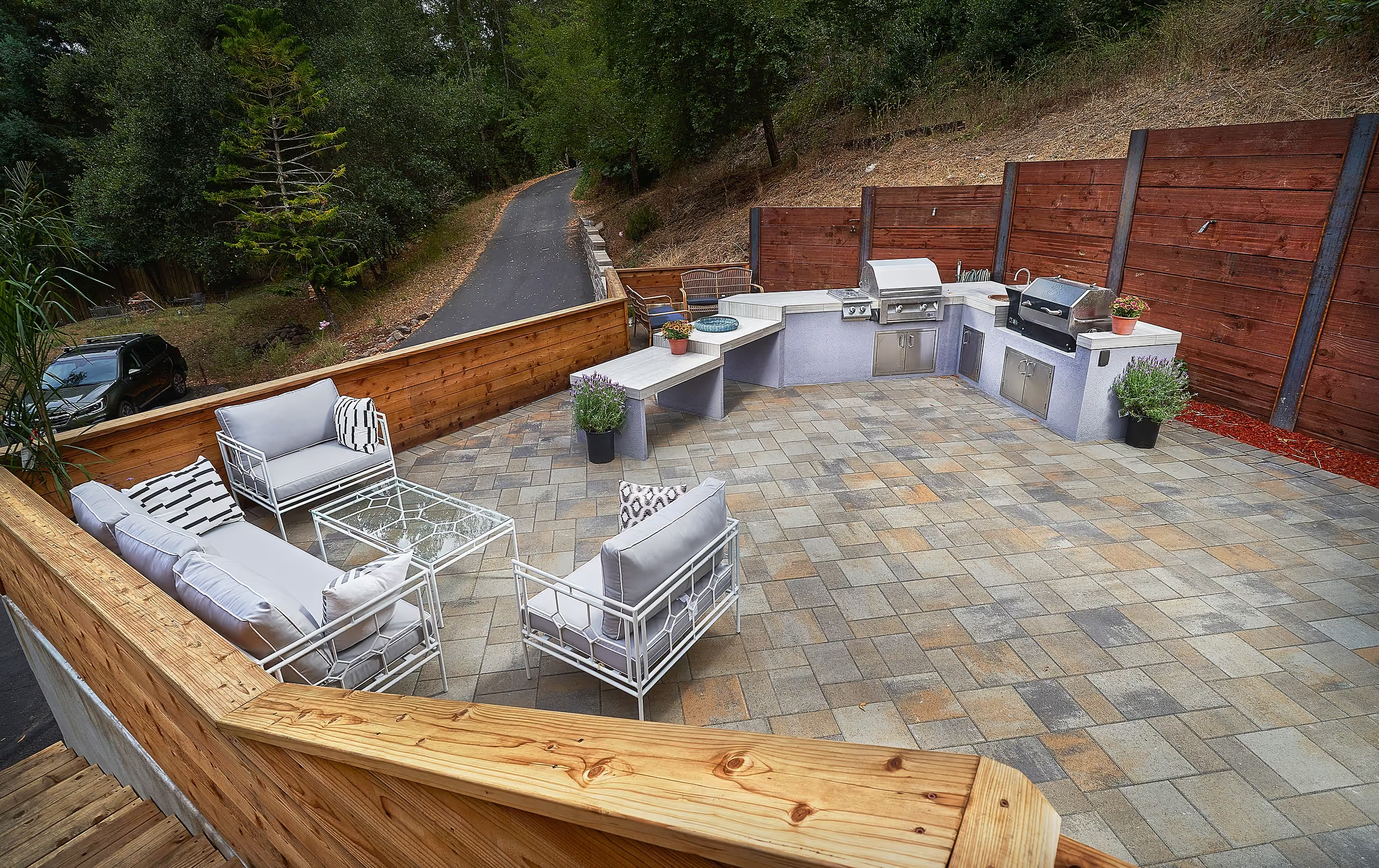
Depending on available space and budget, an outdoor kitchen may include:
- Built-in grills
- Side burners
- Refrigerators
- Beverage centers
- Storage cabinets
- Sinks
- Pizza ovens
- Bar seating
- Countertop preparation areas
The best outdoor kitchens are designed as part of the overall landscape rather than added as isolated structures. Materials, countertops, finishes, and architectural details should coordinate with surrounding patios and the home itself.
Add Comfortable Outdoor Lounge Areas
Comfort is essential when creating a backyard that truly functions as an extension of your home. Outdoor furniture should encourage people to stay, relax, and enjoy the environment rather than simply pass through it.
Consider creating lounge areas with deep seating, outdoor sofas, accent chairs, side tables, and weather-resistant cushions. These spaces can be arranged around a firepit, outdoor fireplace, television, water feature, or landscape focal point.
Furniture placement also influences circulation. Leave enough space for guests to move naturally between cooking, dining, lounging, and other areas without interrupting conversations or creating crowded pathways.
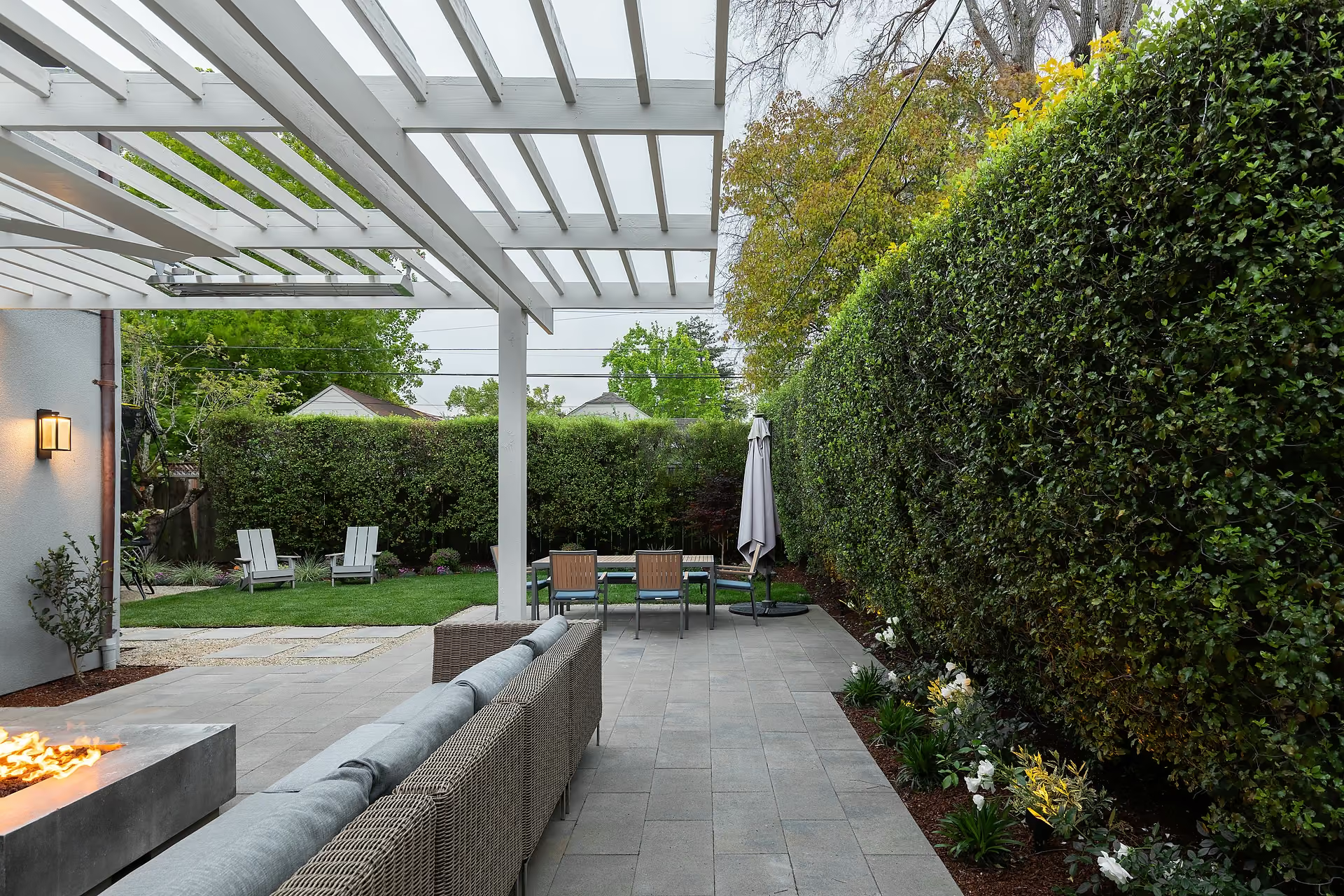
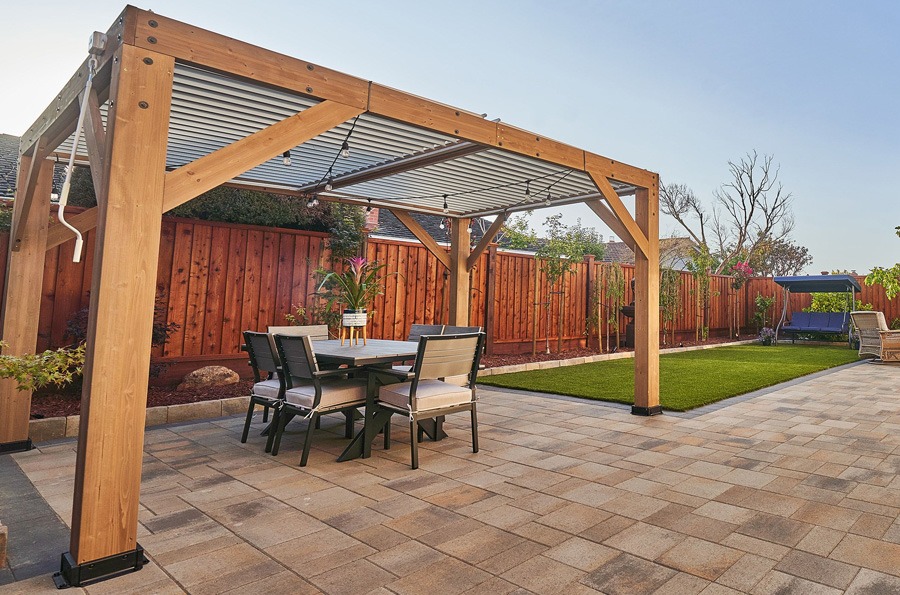
Incorporate Shade With Pergolas and Covered Structures
Shade can dramatically increase the amount of time homeowners spend outdoors, particularly during warmer months. Pergolas, patio covers, and other structures can provide protection from direct sunlight while also adding architectural interest.
A pergola can help define a dining or lounge area while creating a sense of enclosure similar to an indoor room. Modern pergolas may also incorporate features such as:
- Integrated lighting
- Ceiling fans
- Retractable shades
- Outdoor heaters
- Motorized louvers
- Curtains or privacy screens
These additions can make outdoor areas significantly more comfortable throughout changing weather conditions.
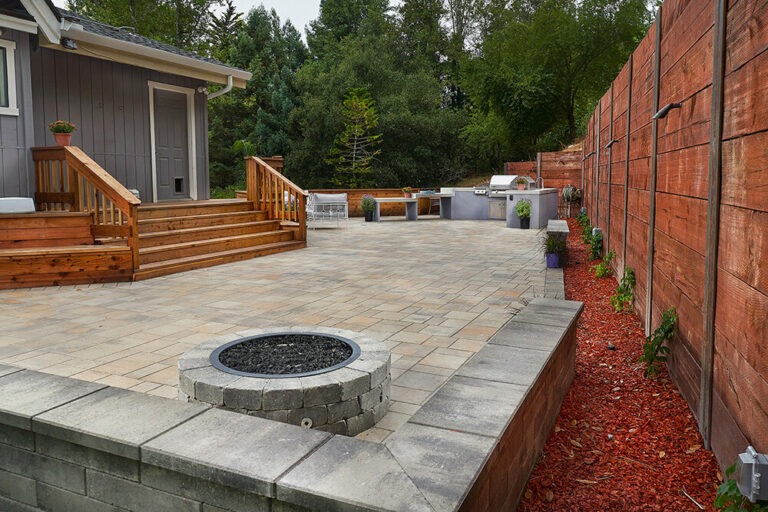
Use Fire Features to Create a Natural Gathering Area
Fire features add warmth, atmosphere, and visual interest to an outdoor environment. They can also become natural gathering points that encourage people to enjoy the backyard well into the evening.
Popular options include built-in firepits, fire tables, and outdoor fireplaces. Their placement should consider both safety and the overall flow of the landscape.
A firepit surrounded by comfortable seating can create an intimate conversation area, while a larger fireplace can become an architectural centerpiece for an outdoor lounge.
Integrate Landscaping Into the Outdoor Living Design
Hardscaping and outdoor structures establish the framework of the yard, but plants bring the landscape to life. Trees, shrubs, ornamental grasses, groundcovers, flowers, and other plantings can soften architectural elements while adding texture, privacy, and seasonal interest.
When planning a luxury outdoor living space, landscaping should be layered strategically rather than simply filling empty areas around patios.
Consider using plants to:
- Frame patios and gathering areas
- Screen neighboring properties
- Create privacy around pools
- Highlight architectural features
- Guide movement along walkways
- Add color and texture
- Soften retaining walls and hardscape edges
Choosing plants that perform well in the Bay Area climate can also reduce maintenance while helping the landscape maintain its appearance throughout the year.
Consider Synthetic Turf for Low-Maintenance Green Space
Homeowners who want the appearance of a consistently green lawn without traditional lawn maintenance may consider synthetic turf.
Artificial grass can work particularly well alongside patios, pools, pathways, children's play areas, and modern landscape designs. Because it does not require mowing or traditional lawn irrigation, it can provide a practical green element within a larger outdoor living design.
Synthetic turf can also help visually balance extensive hardscaping by introducing softer textures and vibrant greenery.
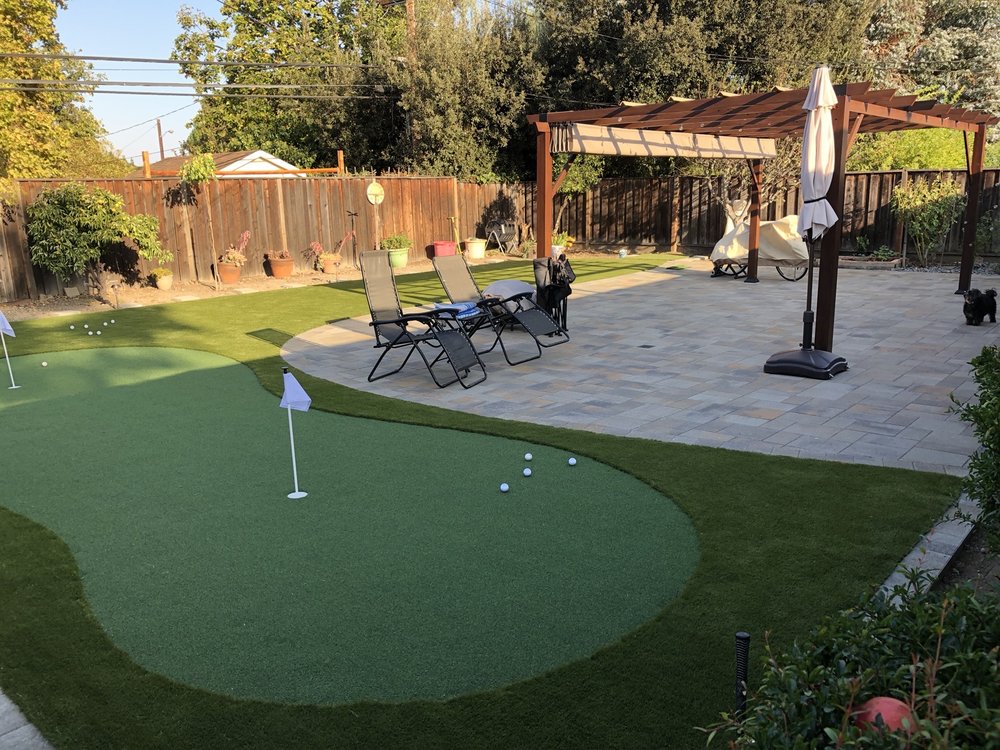
Add a Backyard Putting Green
For golf enthusiasts, a custom putting green can transform unused yard space into a functional recreation area.
Putting greens can be incorporated into both large and compact yards. Their shape can follow the natural contours of the landscape, helping them blend into surrounding patios, gardens, and synthetic lawns.
A professionally designed putting green may include multiple holes, subtle elevation changes, fringe turf, surrounding landscaping, or nearby lounge areas where family and guests can relax.
Design Outdoor Lighting for Beauty and Function
Lighting has an enormous impact on how an outdoor living space feels after sunset. A well-designed lighting plan can highlight architecture, illuminate pathways, improve safety, and create a sophisticated atmosphere.
Instead of relying on one bright fixture, consider layering several types of lighting throughout the landscape.
Outdoor lighting may include:
- Pathway lights
- Step lights
- Patio lighting
- Pergola lighting
- Accent lights
- Landscape uplighting
- Pool lighting
- Outdoor kitchen task lighting
- Fire feature illumination
Thoughtful placement allows lighting to enhance the landscape without overwhelming it.
Create Privacy Without Making the Yard Feel Enclosed
Privacy is often important in residential outdoor spaces, particularly in neighborhoods where properties are relatively close together.
The goal should be to create separation while still maintaining an open, welcoming environment. Privacy can be achieved with a combination of landscaping and architectural features.
Common solutions include:
- Privacy hedges
- Trees
- Decorative screens
- Pergolas
- Fencing
- Raised planters
- Trellises
- Vertical gardens
Layering several of these elements can create privacy naturally while adding visual depth to the landscape.
Maintain Comfortable Traffic Flow Throughout the Yard
A successful outdoor design should allow people to move intuitively from one space to another. Walkways should connect key destinations while furniture, planters, and other features should not obstruct natural movement.
When designing an outdoor living space, think about how someone will travel from the home's interior to the patio, outdoor kitchen, pool, lawn, firepit, or other destinations.
Primary pathways should generally feel generous and direct, while secondary garden paths can be narrower and more exploratory.
Good circulation makes the landscape feel organized and comfortable, even when multiple activities are happening at the same time.
Use Focal Points to Give the Landscape Visual Structure
Luxury outdoor environments often contain one or more focal points that immediately attract attention.
A focal point might be an elegant fire feature, sculptural tree, water feature, outdoor fireplace, pergola, pool, or beautifully designed BBQ island.
The surrounding landscape should help guide attention toward these features through paving patterns, planting arrangements, lighting, and furniture placement. Rather than competing for attention, supporting landscape elements should reinforce the main visual destinations.
Coordinate Colors, Textures, and Materials
Consistency is essential when creating an outdoor environment that feels sophisticated rather than pieced together.
Avoid introducing too many competing materials. Instead, develop a coordinated palette of paving, stone, wood, metal, upholstery, and plant textures that complements the architecture of the home.
For example, the tones of a paver patio might complement exterior stone veneer, while pergola finishes could coordinate with window frames or architectural trim.
Repeating select materials throughout the landscape helps create visual continuity.
Think About the Outdoor Living Space From Inside the Home
A thoughtfully designed backyard should look attractive not only when you are outside but also when viewed from inside.
Consider what you see through major windows and doors. Important outdoor features such as specimen trees, fire features, pools, water elements, or landscape lighting can be strategically positioned where they enhance interior views.
This approach helps strengthen the relationship between indoor and outdoor environments and makes the exterior landscape feel like part of the home's overall architecture.
Plan for Year-Round Outdoor Living
A truly functional luxury outdoor living space should remain usable throughout as much of the year as possible.
In addition to shade structures, homeowners may incorporate fire features, outdoor heaters, wind protection, lighting, and weather-resistant furnishings to extend the outdoor season.
Covered structures can also protect furniture and outdoor kitchens while helping the space remain comfortable during changing weather conditions.
By considering seasonal use during the design process, homeowners can maximize the value and enjoyment of their outdoor investment.
Create Your Luxury Outdoor Living Space With Opulands Landscape & Design
At Opulands Landscape & Design, we are a Bay Area family-owned outdoor remodeling company specializing in luxury residential landscaping and hardscaping design and installation throughout the Bay Area. We focus on creating complete front yard and backyard transformations that combine sophisticated design, quality materials, and functional outdoor living.
Our team designs and builds beautiful paver driveways, patios, walkways, and pool decks that can be accessorized with high-end BBQ islands, pergolas, firepits, and other outdoor living features. We can also incorporate synthetic lawns and custom putting greens to help transform your property into an opulent outdoor oasis.
Quality workmanship is a cornerstone of everything we do. Our goal is to create an outdoor living environment that enhances your home while providing a beautiful, functional space you and your family can enjoy for years to come.

Start Designing an Outdoor Living Space That Elevates Your Home
The best outdoor environments do more than improve the appearance of a backyard—they change how homeowners experience their entire property. By coordinating hardscaping, landscaping, outdoor kitchens, shade structures, fire features, lighting, furnishings, and recreational features, you can create a luxury outdoor living space that genuinely feels like another part of your home.
If you are ready to design outdoor living space areas that reflect your lifestyle and complement your home's architecture, Opulands Landscape & Design can help bring your ideas together. Contact Opulands today to schedule your free landscaping design consultation and start planning a custom outdoor living space built around the way you want to live, relax, and entertain.