
Front Yard Landscaping Before and After Examples: Creating a More Welcoming Entrance

A front yard forms the first impression of a home. It guides visitors from the street to the entrance, frames the architecture, and influences how welcoming the property feels before anyone reaches the front door. When the driveway, walkway, lawn, and planting areas are outdated or poorly coordinated, even an attractive home can appear unfinished.
Reviewing front yard landscaping before and after examples can help homeowners see how focused improvements create a more polished and inviting arrival experience. A successful renovation may replace worn concrete, reshape planting beds, introduce a clearer path to the entrance, improve drainage, or completely reorganize the street-facing landscape.
Opulands Landscape & Design transforms front yards throughout the Bay Area by combining attractive hardscaping with carefully planned greenery and practical site improvements. The following examples explore how individual sections of a front yard can be redesigned to improve curb appeal, accessibility, functionality, and long-term enjoyment.
How Front Yard Landscaping Changes the Look of a Home
Front yard landscaping affects more than the appearance of the lawn. It establishes the visual relationship between the house and the street while determining how residents, guests, vehicles, and delivery personnel approach the property.
An effective front yard design coordinates several important elements:
- Driveway size, shape, and paving material
- The route from the sidewalk or driveway to the front door
- Entry steps and landings
- Lawn or synthetic turf areas
- Trees, shrubs, ornamental grasses, and flowers
- Retaining and decorative walls
- Irrigation and drainage
- Low-voltage landscape lighting
- Visibility, privacy, and security
- Transitions into the side yard and backyard
The best before and after front yard landscaping transformations do not treat these features as unrelated additions. Instead, each section is designed to create a unified entrance that complements the architecture and makes daily access more convenient.
Before: A Plain Concrete Driveway Dominating the Front Yard
A driveway is often the largest paved surface visible from the street. When it consists of stained, cracked, or aging concrete, it can become the first thing people notice about the property.
An older driveway may also have poorly defined edges, narrow parking space, or an awkward connection to the front walkway. Grass and weeds can grow along damaged sections, making the overall frontage appear neglected.

After: A Custom Paver Driveway With a Finished Border
Replacing plain concrete with a professionally installed paver driveway can substantially change the character of the home. Pavers introduce pattern, texture, and color while creating an opportunity to coordinate the driveway with the walkway, entry steps, and architectural finishes.

A completed design may feature:
- A defined paver pattern across the main driveway
- Contrasting borders that emphasize its shape
- Expanded or adjusted parking areas
- Clean transitions to the garage and sidewalk
- Coordinated bands leading toward the front entrance
- Planting beds that soften the edges of the paved surface
The driveway remains practical, but it also becomes an intentional part of the landscape. Instead of visually overwhelming the home, the upgraded surface helps establish a more refined entrance.
Before: An Entry Walkway That Is Narrow or Difficult to Follow
Many older properties have a straight concrete path that is too narrow for comfortable use. In other cases, visitors must walk along the driveway because there is no clearly visible route from the street to the door.
Cracks, uneven slabs, overgrown plants, and poor lighting can make the approach less attractive and potentially harder to navigate. A walkway that meets the entry at an awkward angle may also make the front door feel visually disconnected from the rest of the property.

After: A Welcoming Paver Walkway Leading to the Door
In this front yard landscaping before and after transformation, the entrance path becomes a prominent design feature. A wider paver walkway can create a direct and comfortable route while visually drawing attention toward the front door.
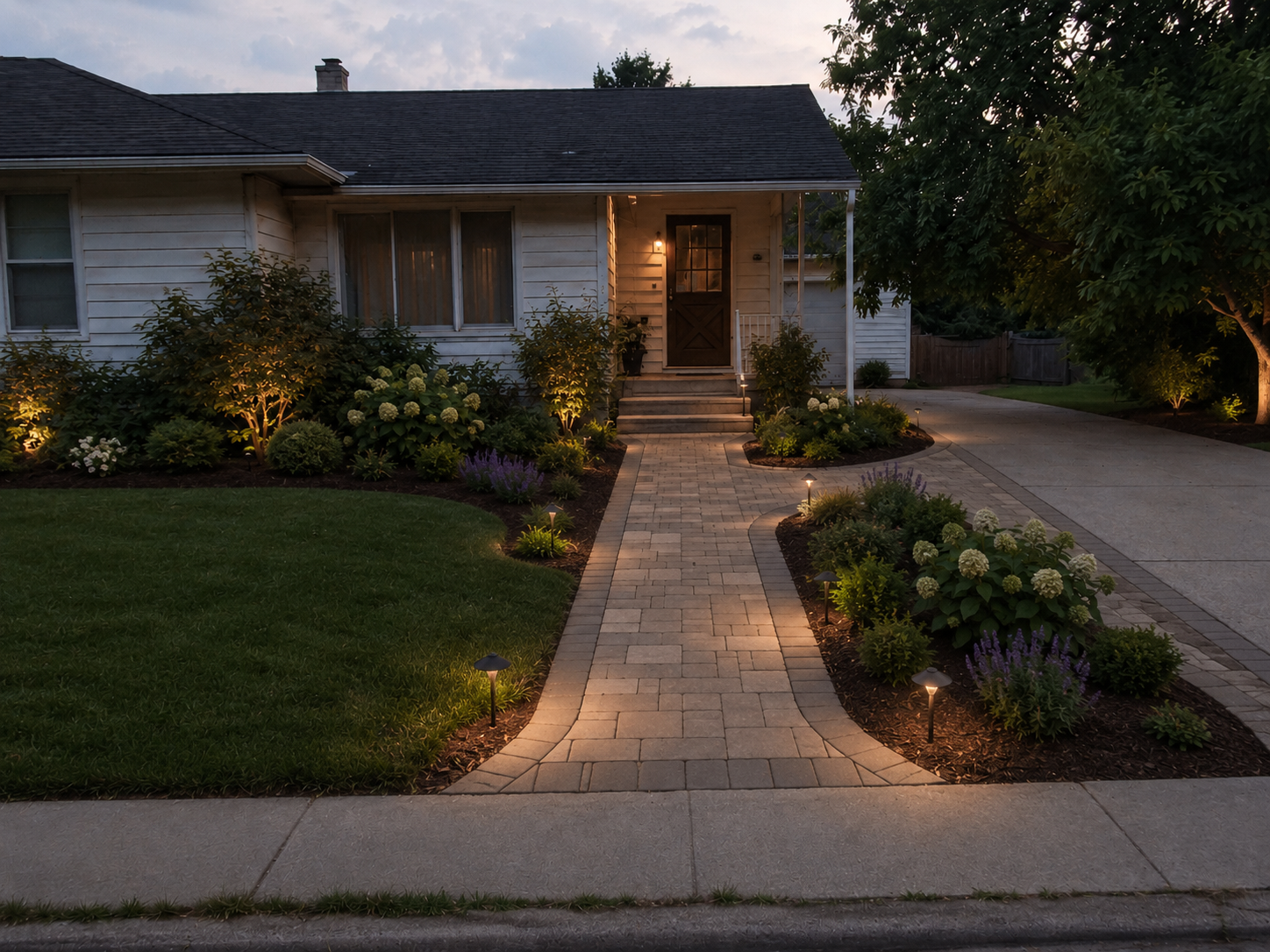
Depending on the layout, the new walkway may incorporate:
- Gentle curves or purposeful geometric lines
- A wider landing near the entrance
- Paver borders that coordinate with the driveway
- Integrated steps for changes in elevation
- Low-voltage path lighting
- Planting beds positioned along both sides
- A branch connecting to the side yard or gate
A well-designed walkway makes the property feel easier to approach. It also creates a more ceremonial arrival by gradually guiding visitors from the public sidewalk to the private entrance.
Before: Patchy Grass and Undefined Planting Areas
A struggling front lawn can make the entire property appear inconsistent. Brown spots, weeds, compacted soil, inefficient irrigation, and irregular edges may remain visible even when homeowners invest significant time in maintenance.
Planting areas can create similar problems when they lack clear borders or contain shrubs that have become too large for the available space. Overgrown vegetation may conceal architectural details, block windows, or narrow the walkway.

After: A Balanced Lawn and Layered Planting Design
A complete front yard redesign can replace the uneven appearance with a more structured combination of lawn and planting beds. The central green space may be reshaped to improve its proportions, while the surrounding beds can be enlarged or repositioned to frame the home.

The planting design may use layers of different heights:
- Low groundcovers near walkways
- Flowering perennials for seasonal color
- Ornamental grasses for movement and texture
- Medium-sized shrubs for structure
- Accent plants near the entrance
- Small trees positioned to frame rather than hide the house
Defined edging provides a clean separation between lawn, planting, and hardscaping. The finished landscape looks fuller and more intentional without allowing vegetation to overwhelm the home.
Before: A Water-Intensive Lawn Requiring Constant Maintenance
Large natural lawns can require regular watering, mowing, edging, fertilizing, and weed control. In areas where grass receives excessive shade or heavy foot traffic, it may continue to deteriorate despite frequent upkeep.
A front yard dominated by lawn can also lack visual variety. Without trees, planting beds, or architectural features, the landscape may appear flat and disconnected from the style of the house.

After: A Low-Maintenance Synthetic Lawn With Decorative Borders
Synthetic turf can provide a consistently green surface while reducing routine lawn maintenance. It may be installed as a central panel, in smaller geometric sections, or between larger planting areas depending on the style of the property.

A finished design can combine synthetic lawn with:
- Paver walkways and stepping paths
- Decorative rock or gravel
- Drought-conscious planting beds
- Accent trees
- Clean concrete or paver edging
- Landscape lighting
- A matching transition into the side yard
The result maintains the familiar appearance of a lawn while giving the front yard sharper lines and a more dependable finish. Surrounding greenery and hardscaping prevent the turf from appearing isolated or overly uniform.
Before: An Entrance Hidden by Overgrown Shrubs
Mature landscaping can be valuable, but plants that are poorly placed or left unmanaged may conceal the front door. Large shrubs beneath windows, crowded hedges along the walkway, and low tree branches can make an entrance feel dark or difficult to locate.
Overgrown plants can also reduce natural light, obstruct views from inside the house, and create tight passageways near steps or doors.

After: An Open, Clearly Framed Front Entrance
Selective removal and replanting can reveal the architecture while preserving an attractive amount of greenery. Lower plantings may replace oversized shrubs near windows, while matching accent plants can frame the entry without blocking it.

This transformation often includes:
- Opening the sightline from the street to the door
- Widening the visible entrance landing
- Using symmetrical or intentionally balanced plant groupings
- Adding a specimen plant or decorative container near the door
- Illuminating steps, columns, or address numbers
- Repeating materials found elsewhere in the landscape
The finished entrance feels brighter, safer, and more inviting. Guests can immediately understand where to go, and architectural details that were previously hidden become part of the front yard composition.
Before: A Sloped Front Yard With Erosion or Wasted Space
Elevation changes can make a front yard difficult to maintain. Water may wash soil toward the sidewalk, mulch may slide out of planting beds, and steep lawn areas can be challenging to mow.
Without structural organization, a slope may appear like leftover land between the street and the house. It can also create awkward transitions between the driveway, walkway, and entrance.

After: Terraced Planting Areas and Retaining Walls
A retaining wall can reshape a sloped front yard into stable, visually organized levels. Rather than allowing the incline to control the design, terraces can establish purposeful spaces for planting while supporting improved access and erosion management.

A transformed slope may include:
- Decorative retaining walls
- Tiered planting beds
- Integrated landscape steps
- A defined paver walkway
- Groundcovers that help stabilize exposed soil
- Drip irrigation for targeted watering
- Lighting incorporated near walls or stairs
Walls can be coordinated with the color and texture of the driveway or walkway, helping the landscape feel cohesive. Terracing also creates depth by allowing plants to be viewed at several elevations from the street.
Before: Outdated Steps and an Undersized Front Landing
The final approach to the door is one of the most important parts of a front yard. Narrow steps, cracked surfaces, inconsistent riser heights, and small landings can detract from the appearance of the entrance and make it difficult for multiple people to gather near the door.
A basic landing may also provide no space for planters, seating, or decorative features that would make the entry feel more complete.

After: Redesigned Steps and an Expanded Entry Landing
New steps and a larger landing can establish a stronger visual connection between the walkway and the house. Pavers or coordinated masonry can replace mismatched materials, creating a consistent finish from the driveway to the threshold.

The expanded landing may provide room for:
- Decorative planters
- A small bench
- Seasonal accents
- Improved lighting
- Wider access to the door
- A more comfortable place for guests to wait
This before and after front yard landscaping improvement focuses on a relatively compact area, but it can significantly affect the overall arrival experience. The entrance becomes a destination rather than simply the end of a narrow path.
Before: A Yard With No Evening Definition
A front yard may appear attractive during daylight but become difficult to navigate after sunset. Dark walkways, unlit steps, and poorly visible house numbers can make the property less convenient for residents and visitors.
A lack of lighting also means that attractive landscaping and architectural features disappear from view at night.

After: Layered Landscape Lighting for Safety and Atmosphere
Professionally planned landscape lighting can improve visibility without making the property feel overly bright. Different fixtures can be used for specific purposes, allowing the lighting design to support safety and presentation at the same time.

Possible applications include:
- Path lights along walkways
- Step lights near elevation changes
- Uplighting beneath trees
- Accent lighting on textured walls
- Illumination around the entry landing
- Lighting near address numbers
- Subtle fixtures within planting beds
The completed front yard remains visually appealing after dark. Lighting highlights important routes, helps visitors identify the entrance, and gives the property a finished evening appearance.
Before: Disconnected Driveway, Walkway, and Planting Materials
A front yard can contain individually attractive features yet still appear unorganized when the materials do not relate to one another. For example, a gray concrete driveway, red brick walkway, random stone borders, and unrelated decorative gravel may compete for attention.
The same problem occurs when plants are added one at a time without considering repetition, mature size, or the architecture of the house.

After: A Unified Material and Planting Palette
A comprehensive redesign simplifies the visual language of the property. Pavers may be repeated across the driveway, pathway, and entry landing, while a limited selection of complementary plants creates rhythm throughout the yard.

A cohesive palette can be developed by coordinating:
- Primary and border paver colors
- Wall and step materials
- Decorative gravel
- Plant foliage and flower colors
- Mulch or groundcover finishes
- Light fixture styles
- Containers and entry accents
Repetition allows separate sections of the yard to feel connected. The home, hardscaping, and greenery begin to read as one complete design rather than a collection of unrelated updates.
Before: An Unfinished Strip Between the Driveway and Property Line
Narrow sections beside a driveway are often difficult to landscape. The area may contain worn grass, weeds, compacted soil, or a mixture of utility equipment and trash containers.
Because these strips receive regular foot traffic and may have limited irrigation access, conventional planting is not always the most practical option.

After: A Clean Utility Path or Low-Maintenance Garden
An unused strip can be transformed into a functional extension of the front landscape. Depending on its width, it may become a paver walkway leading to the side gate or a low-maintenance planting area with gravel and drought-conscious plants.

The redesigned space may include:
- Stepping stones or a continuous paver path
- Decorative gravel
- Narrow planting pockets
- Screening for utility areas
- Defined storage pads
- Drainage improvements
- A secure transition to the side gate
Improving this secondary area prevents it from detracting from the main entrance. It also supports cleaner, more convenient movement around the property.
Why the Front Yard Should Be Designed as One Complete Space
Front yard renovations are sometimes approached as a series of isolated repairs. A homeowner may replace the driveway first, install a walkway later, and eventually add new plants without developing an overall plan.
Although phased construction can be practical, completing improvements without a master design may produce inconsistent materials or limit future options. For example, a newly installed driveway could leave insufficient room for a comfortable walkway, or new planting beds could interfere with drainage that must be addressed later.
Planning the complete front yard in advance allows the driveway, entry path, stairs, walls, lawn, irrigation, planting, and lighting to support one another. The project can still be divided into phases, but each phase contributes to a clearly defined final result.
Transform Your Front Yard With Opulands Landscape & Design
Opulands Landscape & Design is a Bay Area family-owned outdoor remodeling company specializing in luxury residential landscaping design and installation. We specialize in front yard and backyard transformations throughout the Bay Area, helping homeowners create outdoor spaces that are attractive, functional, and thoughtfully connected to their homes.
Our team designs and builds beautiful paver driveways, patios, walkways, and pool decks accessorized with high-quality BBQ islands, pergolas, and fire pits. We can also add a synthetic lawn or putting green to transform an ordinary yard into an opulent oasis. Quality workmanship is a cornerstone of Opulands, and our goal is to create an outdoor living space you will enjoy for years to come.

Create a More Welcoming Entrance With Opulands. Contact Us Today For a Free Landscape Design Quote
The right front yard improvements can completely change how a home looks and feels from the street. A coordinated combination of paver driveways, entry walkways, steps, retaining walls, lawns, planting, and lighting can create a polished entrance while addressing practical concerns such as circulation, maintenance, drainage, and access.
Contact Opulands Landscape & Design to schedule a free landscaping design consultation. Our team can help you identify the possibilities for your front yard and develop a custom design that gives your Bay Area home a more welcoming, refined, and lasting entrance.